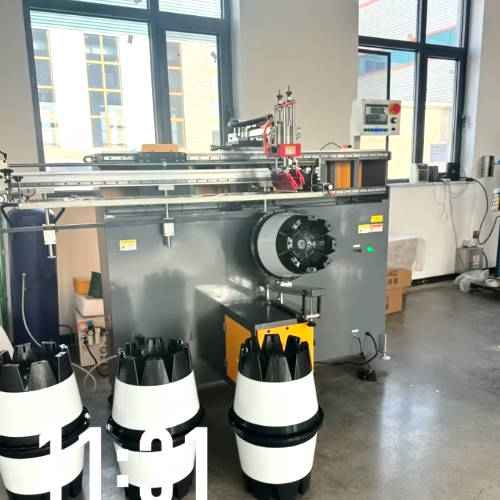
A pad printing machine is a specialized printing device designed to transfer images, logos, or text onto irregularly shaped, curved, or three-dimensional surfaces that are difficult to print on with traditional methods (like screen printing or heat transfer). It uses a flexible silicone pad as an intermediary to pick up ink from a etched plate and deposit it onto the substrate, making it ideal for complex or non-flat surfaces.
The machine’s functionality relies on several key parts working in coordination:
- Cliché (Etched Plate): A metal (usually steel or brass) or photopolymer plate with the desired design etched into its surface. The etched area holds the ink, while the non-etched areas remain smooth and repel ink.
- Silicone Pad: A flexible, rubber-like pad (made of silicone) with a shape tailored to the substrate (e.g., convex for curved surfaces, flat for slightly uneven ones). Its flexibility allows it to conform to irregular shapes, ensuring full ink transfer.
- Ink Cup/Doctor Blade:
- The ink cup holds the printing ink and slides over the cliché, filling the etched design with ink.
- The doctor blade (a sharp, flat blade) scrapes excess ink off the cliché’s surface, leaving ink only in the etched grooves.
- Substrate Fixture: A holder or jig that secures the substrate (the item being printed) in a precise position, ensuring alignment between the pad and the surface.
- Mechanical System: Drives the movement of the ink cup, pad, and substrate fixture, coordinating the printing cycle (ink application, pad contact, and transfer).
The process is a repetitive cycle optimized for precision and consistency:
-
Ink Application:
- The ink cup (filled with specialized pad printing ink) slides across the cliché. As it moves, it deposits ink into the etched design on the plate.
- The doctor blade attached to the ink cup scrapes off any ink remaining on the non-etched areas of the cliché, leaving ink only in the grooves of the design.
-
Pad Pickup:
- The silicone pad descends onto the cliché, pressing gently against the etched area. The pad’s flexibility allows it to make full contact with the ink-filled grooves.
- The ink adheres to the pad’s surface, transferring completely from the cliché to the pad.
-
Image Transfer:
- The pad lifts away from the cliché and moves to align with the substrate (held in the fixture).
- The pad then presses against the substrate, conforming to its shape (curved, textured, or irregular). The ink on the pad transfers onto the substrate’s surface.
-
Cycle Repeat:
- The pad lifts, the ink cup resets, and the process repeats for the next item, ensuring efficient, repeatable printing.
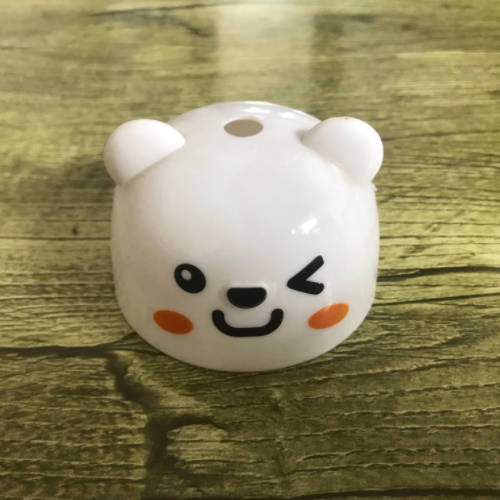
- Versatility with Surfaces: Excels at printing on non-flat, curved, or small surfaces (e.g., pens, phone buttons, toys, medical devices, and electronic components).
- Detail and Precision: Can reproduce fine lines, small text, and intricate designs (down to 0.1mm details) with high accuracy.
- Material Compatibility: Works with a wide range of substrates, including plastics, metals, glass, ceramics, rubber, and even some fabrics.
- Speed and Efficiency: Automated models can handle high-volume production (hundreds to thousands of items per hour), making it suitable for mass manufacturing.
Pad printing is widely used across industries where irregular surfaces need decoration or branding:
- Promotional Products: Pens, keychains, lighters, and USB drives.
- Toys and Games: Plastic figures, action toys, and game controllers.
- Electronics: Buttons on remote controls, phone cases, and circuit boards.
- Medical Devices: Tools, instrument handles, and diagnostic equipment.
- Automotive Parts: Small components like knobs, switches, and trim pieces.
- Manual Machines: Operated by hand, suitable for low-volume, small-batch production (e.g., custom crafts or prototypes).
- Semi-Automatic Machines: Combine manual substrate loading with automated ink cup and pad movement, ideal for medium-volume runs.
- Fully Automatic Machines: Equipped with robotic arms or conveyor systems for substrate feeding and unloading, designed for high-volume, continuous production.
In short, pad printing machines solve the challenge of printing on complex surfaces, offering precision, versatility, and efficiency for both small-scale customization and large-scale manufacturing.